
The Rising Toll: Construction Workers Facing Deadly Risks in New Jersey
The construction industry in New Jersey is experiencing an alarming surge in fatal workplace accidents, with fatalities increasing in recent years. Behind this is a family forever changed, coworkers traumatized, and communities impacted. Understanding your legal rights is crucial if you've lost a loved one to a construction accident or are concerned about safety conditions at your worksite.
In the face of rising construction fatalities, it's crucial to know your rights and seek justice for your loved ones. The Law Offices of Thaddeus P. Mikulski Jr. is here to guide you through the legal maze, ensuring you receive the support and compensation you deserve. Don't wait—reach out today at 609-507-1396 or contact us to take the first step towards securing your family's future.
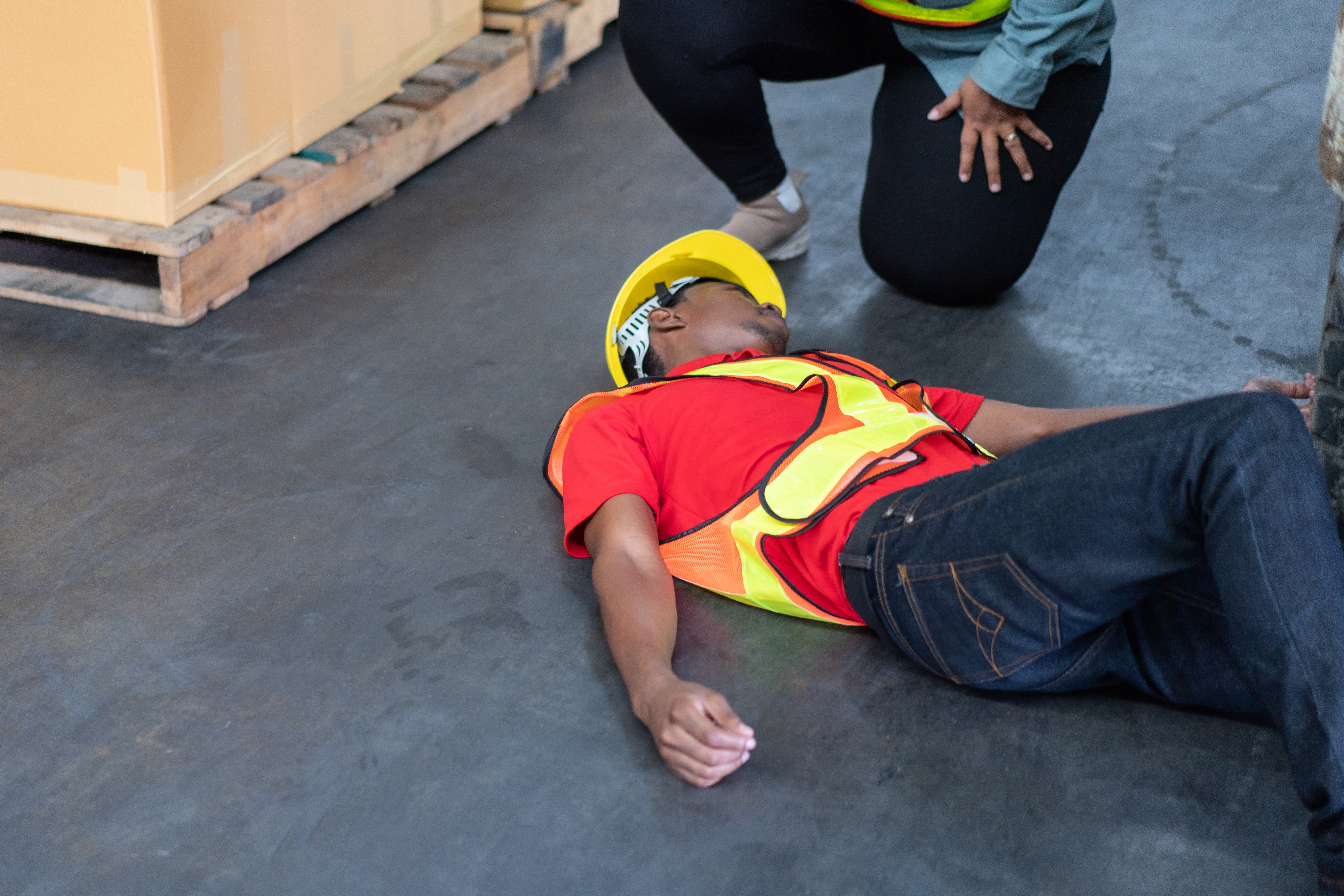
Your Legal Shield: The Occupational Safety and Health Act and Workers' Rights
Every construction worker in New Jersey has fundamental legal protections under the Occupational Safety and Health Act (OSH Act). Signed into law by President Nixon in 1970, this landmark legislation established OSHA and codified the right to workplace safety as a legal guarantee, not a privilege. Under this framework, you have the explicit right to raise safety concerns without fear of retaliation, receive proper safety training, refuse dangerous work assignments, and expect overall protection in your workplace environment. When employers fail to uphold these obligations, they face significant consequences.
As of 2024, OSHA can impose civil penalties ranging from $1,190 to $16,131 for serious violations. For employers who knowingly endanger workers or repeatedly violate safety standards, the stakes are even higher—minimum penalties of $11,524 per violation. These protections aren't abstract legal concepts; they're essential shields designed to protect your life and livelihood. New Jersey's specific legal framework provides additional layers of protection for workers injured in construction accidents. When these protections fail and tragedy occurs, families have legal recourse through wrongful death claims and workers' compensation death benefits.
Critical Steps Following a Fatal Construction Accident in New Jersey
The aftermath of a fatal construction accident is overwhelming for families. Understanding the timeline of legal processes and critical steps to take within 24 hours of a construction site injury can help navigate this difficult period. Knowledge is power during this challenging time, and taking appropriate action within specific timeframes can significantly impact the outcome of any legal claims. The legal system provides avenues for justice and compensation, but these paths have strict procedural requirements that must be followed to preserve your rights.
Immediate Notification Requirements: By law, employers must report any workplace fatality to OSHA within 8 hours of the incident. This triggers an investigation that could uncover critical safety violations and provide essential evidence for subsequent legal actions.
Two-Year Statute of Limitations: In New Jersey, wrongful death claims generally must be filed within two years of the date of death. This timeline is strictly enforced, and missing this deadline typically results in permanent loss of legal rights.
Workers' Compensation Death Benefits: Dependents must file for death benefits within two years, but should initiate claims as soon as possible as these benefits can provide immediate financial support while more complex legal actions proceed.
OSHA Investigation Timeline: OSHA typically completes workplace fatality investigations within six months, with preliminary findings often available sooner. These investigations can reveal critical safety violations that weren't previously documented.
Third-Party Claim Considerations: Beyond workers' compensation, families may have claims against equipment manufacturers, subcontractors, or property owners. These "third-party claims" follow different timelines but generally must be initiated within two years.
Finding Justice and Support After a Construction Fatality
The path to resolution after losing a family member to a construction accident involves navigating complex legal processes while dealing with profound grief. The Law Offices of Thaddeus P. Mikulski Jr. understands that families need both compassionate support and aggressive legal representation during this difficult time. When OSHA penalties—even at their maximum of $16,131 for serious violations—seem woefully inadequate compared to the loss of a loved one, pursuing additional legal remedies becomes essential.
A thorough case evaluation can identify all potential sources of compensation, including workers' compensation death benefits, wrongful death claims against negligent parties, and third-party liability claims. This comprehensive approach ensures that families receive the full measure of justice and financial support available under New Jersey law. While no legal outcome can truly compensate for the loss of a loved one, holding responsible parties accountable can provide a measure of closure and prevent similar tragedies in the future.
The Hidden Factors Behind Rising Construction Fatalities in New Jersey
The increase in New Jersey construction fatalities isn't happening in isolation or by chance. Multiple systemic factors contribute to this alarming trend and overall construction death statistics. Understanding these underlying causes is crucial not only for preventing future tragedies but also for building stronger legal cases when accidents do occur.
The construction industry faces unique challenges that create heightened risk environments, from pressure to complete projects quickly to the involvement of multiple contractors on a single site. When we examine construction sites where fatalities have occurred, patterns often emerge that point to preventable safety failures and regulatory gaps.
Regulatory Enforcement Gaps and Inadequate Penalties
Despite OSHA's mandate to protect workers, the agency faces significant challenges in providing adequate oversight. With current staffing levels, it would take OSHA over 160 years to inspect every workplace under its jurisdiction just once. This enforcement reality means many dangerous conditions go undetected until tragedy strikes.
The current penalty structure—with maximum fines of $16,131 for serious violations—often represents merely a cost of doing business for large construction companies rather than a meaningful deterrent. We've seen numerous cases where companies repeatedly violated the same safety standards because paying occasional fines was cheaper than implementing proper safety measures. When these enforcement gaps contribute to fatal accidents, skilled legal representation becomes even more critical to achieve justice beyond what regulatory penalties can provide.
Common OSHA Violations Behind Construction Fatalities
Fatal construction accidents rarely occur without warning signs. In most cases investigated by OSHA, inspectors discover multiple safety violations that directly contributed to the tragedy. The "Fatal Four"—falls, struck-by incidents, electrocutions, and caught-in/between accidents—account for the majority of construction deaths nationwide and in New Jersey.
Each of these accident types - and other common injuries in the construction industry - typically involves specific OSHA violations that could have been prevented through proper safety protocols. When a fatal accident occurs, identifying these violations becomes crucial for establishing liability in subsequent legal actions. Under the OSH Act framework, employers have a legal obligation to provide a workplace free from recognized hazards, and failures to meet this standard form the basis for both regulatory penalties and civil liability.
Fall Protection Failures: The Leading Killer
Fall protection violations consistently rank as OSHA's most frequently cited standard in construction, and for good reason—falls remain the leading cause of construction fatalities. The requirements are clear: employers must provide fall protection systems when workers are operating at heights of six feet or more above a lower level. Yet violations persist, often in the form of missing guardrails, inadequate personal fall arrest systems, or unprotected floor openings.
The minimum penalty of $1,190 for serious violations often fails to reflect the catastrophic consequences when these protections are absent. In fatal fall cases, evidence of these violations becomes critical in establishing negligence. Workers in Princeton and throughout New Jersey deserve better protection, and when these basic safeguards are ignored, wrongful death claims can hold negligent parties accountable beyond OSHA's limited penalties.
Workers' Rights and Employer Responsibilities Under New Jersey Law
New Jersey workers have specific rights beyond those provided by federal OSHA regulations. Understanding these rights is essential for construction workers and their families, especially in the context of the rising fatality rates. The OSH Act provides the foundation by establishing that workers have the legal right to a safe workplace, but New Jersey's robust worker protection laws add additional layers of security.
These include the right to refuse unsafe work without retaliation, the right to request OSHA inspections, and the right to access information about workplace hazards. When these rights are violated and fatalities result, multiple legal remedies become available to surviving family members. Employers who intentionally endanger workers face not only OSHA penalties starting at $11,524 per violation but also potential civil and even criminal liability under New Jersey law.
The Right to Refuse Dangerous Work
One of the most powerful but underutilized worker protections is the right to refuse dangerous work assignments. Under both OSHA regulations and New Jersey law, workers can decline tasks that present an imminent danger without fear of retaliation. This right exists specifically to prevent fatalities in situations where workers identify hazards that management has failed to address.
The key legal standard is whether a reasonable person would conclude that a genuine danger of death or serious injury exists and there's insufficient time for regular enforcement channels to address the hazard. Unfortunately, many workers remain unaware of this right or fear exercising it despite legal protections. Others aren’t aware of general construction safety statistics. When fatalities occur in situations where workers felt unable to refuse dangerous assignments, these circumstances can strengthen wrongful death claims by demonstrating a culture of safety suppression that contributed to the fatal outcome.
Third-Party Liability in Construction Fatalities
While workers' compensation provides death benefits to dependents of fatally injured workers, these benefits are often insufficient to address the full economic and emotional impact of losing a family member. Fortunately, New Jersey law recognizes that in many construction fatalities, parties other than the direct employer bear responsibility. These "third-party claims" allow families to seek additional compensation beyond workers' compensation benefits.
Common third parties in construction fatality cases include general contractors, subcontractors, equipment manufacturers, property owners, and architects or engineers. Unlike workers' compensation, which operates under a no-fault system with limited benefits, third-party claims require proving negligence but offer the potential for more comprehensive compensation, including for pain and suffering experienced before death.
Multi-Employer Worksite Doctrine
Construction sites typically involve multiple employers working simultaneously, creating complex liability questions when fatalities occur. Under OSHA's Multi-Employer Worksite Doctrine, multiple entities can be held responsible for safety violations that lead to worker deaths. This doctrine recognizes four types of employers with safety responsibilities: creating employers who create hazardous conditions, controlling employers who have supervisory authority, correcting employers designated to fix hazards, and exposing employers whose workers face the dangers.
This framework often allows for holding general contractors or site managers accountable even when the victim worked for a subcontractor. In our experience handling construction fatality cases in Princeton, establishing these relationships and corresponding responsibilities forms a crucial part of building successful third-party claims that provide meaningful compensation to grieving families.
Frequently Asked Questions
What should families do immediately after losing a loved one in a Princeton construction accident?
After the initial shock and attending to immediate family needs, contact a construction death lawyer in Princeton who understands workplace fatalities. They can help preserve critical evidence, ensure proper notification to relevant authorities, including OSHA, and initiate the workers' compensation death benefits process. The attorney will also identify potential third-party claims beyond workers' compensation and ensure all legal deadlines are met. While focusing on grief and family support should be your priority, having legal representation early helps protect your rights during this vulnerable time.
How does a New Jersey construction accident lawyer determine who's liable in a fatal construction accident?
A skilled construction accident lawyer investigates multiple factors to determine liability, including OSHA compliance history, site safety plans, equipment maintenance records, and witness statements. They'll examine relationships between various contractors and subcontractors under the Multi-Employer Worksite Doctrine to identify all potentially responsible parties. The investigation also considers equipment defects, training adequacy, and supervision practices. Because New Jersey has specific workplace safety requirements beyond federal OSHA standards, local knowledge is crucial. This comprehensive approach ensures all liable parties are identified, maximizing potential compensation for the family.
What compensation can families recover with a Princeton wrongful death attorney after a construction fatality?
With proper legal representation, families may recover several types of compensation. Through third-party wrongful death claims, additional compensation may include the full value of lost income and benefits, loss of companionship and guidance, emotional suffering, and punitive damages in cases of gross negligence. A Princeton wrongful death attorney can also pursue compensation for medical expenses incurred before death and the pain and suffering the victim experienced between the accident and their passing.
How do NJ workplace safety laws affect construction safety lawsuit outcomes in Princeton?
New Jersey workplace safety laws significantly impact construction fatality lawsuits by establishing clear standards of care that, when violated, can establish negligence. While workers' compensation generally prevents suing one's employer, these safety standards are crucial in third-party claims against general contractors, property owners, or equipment manufacturers. New Jersey courts recognize that OSHA violations constitute strong evidence of negligence under the "negligence per se" doctrine. Additionally, New Jersey's comparative negligence laws allow recovery even if the deceased worker was partially at fault, as long as their responsibility doesn't exceed 50%. These legal frameworks provide Princeton construction injury attorneys with powerful tools to secure justice for families.
What timeline should families expect when working with a Princeton OSHA compliance attorney on a fatal accident case?
The timeline for construction fatality cases typically spans 1-3 years. Initially, an OSHA investigation takes 3-6 months to complete. Workers' compensation death benefits should begin within weeks of filing if eligibility is clear. For third-party wrongful death claims, the investigation and case-building phase usually takes 3-6 months, followed by negotiations that may last several more months. If a fair settlement isn't reached, litigation typically adds 1-2 years to the process. Throughout this timeline, a Princeton OSHA compliance attorney will handle interactions with investigators, insurance companies, and opposing counsel while keeping the family informed of progress and options at each stage.
Work with a Construction Accidents Lawyer
The rising tide of construction fatalities in New Jersey demands skilled legal representation for affected families. The Law Offices of Thaddeus P. Mikulski Jr. brings deep experience in navigating the complexities of construction accident cases, from OSHA violations to third-party liability claims. When facing the aftermath of a construction fatality, families need an advocate who understands both the technical aspects of construction safety and the nuances of New Jersey's legal framework.
Our approach focuses on thorough investigation, comprehensive case building, and persistent advocacy. We work diligently to identify all responsible parties, from negligent contractors to equipment manufacturers, ensuring that no stone is left unturned in seeking justice and compensation. While no legal outcome can truly compensate for the loss of a loved one, holding responsible parties accountable can provide both financial security for dependents and a measure of closure. If you've lost a family member to a construction accident, remember that strict time limits apply to legal claims—reaching out for a consultation as soon as you're able can help preserve your rights during this difficult time.
In light of the alarming rise in construction fatalities, it's vital to understand your legal rights and take action. The Law Offices of Thaddeus P. Mikulski Jr. is ready to assist you in navigating the legal landscape to secure the justice and compensation you deserve. Don't hesitate—call us at 609-507-1396 or contact us today to safeguard your family's future.